
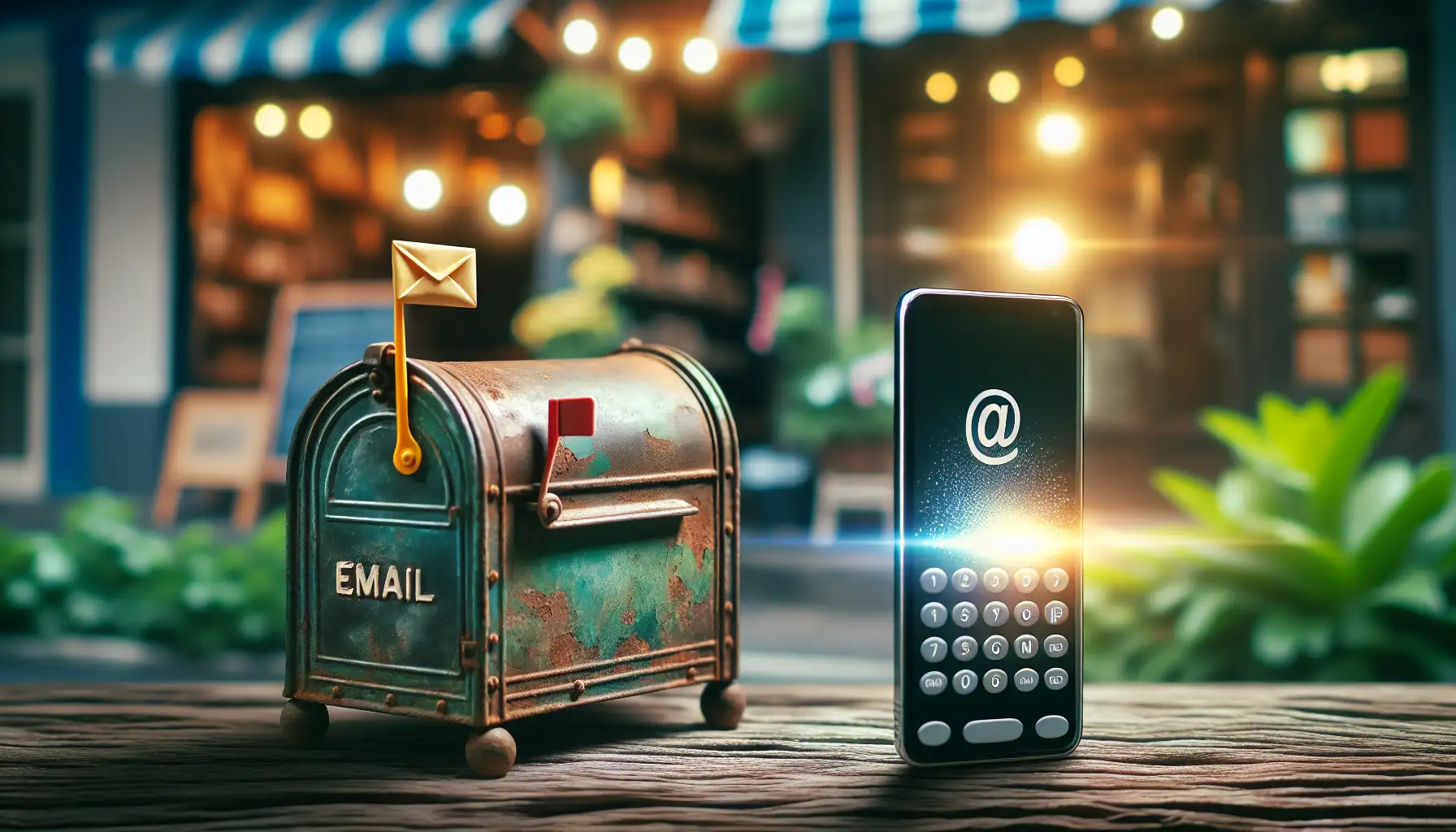
Email inboxes are crowded, but text messages still get instant attention. In today’s oversaturated digital landscape, the SMS vs email marketing debate has become increasingly relevant for businesses seeking effective customer engagement strategies. While marketers continue to flood email inboxes with promotional content, SMS messages cut through the noise with remarkable efficiency.
Consider this compelling statistic: SMS open rates consistently exceed 90%, compared to email’s average of just 20%. This dramatic difference isn’t merely about numbers—it represents a fundamental shift in how consumers interact with marketing messages. Moreover, SMS messages are typically read within three minutes of delivery, while emails often languish unopened for hours or days.
This article explains why SMS is outperforming email marketing and how local businesses can leverage text messaging to win customers, increase engagement, and drive conversions. We’ll explore the declining effectiveness of traditional email campaigns, examine the rising power of SMS engagement, and provide practical strategies for implementing successful text marketing campaigns.
The decline of email marketing effectiveness
Email marketing, once the gold standard of digital communication, faces unprecedented challenges in today’s marketplace. The primary culprit behind email’s declining effectiveness is the increasingly sophisticated spam filtering systems that prevent legitimate marketing messages from reaching their intended recipients. These filters, while protecting consumers from unwanted content, often catch legitimate business communications in their nets.
Furthermore, the sheer volume of emails flooding consumer inboxes has created a phenomenon known as “email fatigue.” The average professional receives over 120 emails per day, making it nearly impossible for marketing messages to stand out. Consequently, people have developed selective attention patterns, often ignoring promotional emails entirely or relegating them to promotional folders that rarely get checked.
The psychological aspect of email consumption has also changed dramatically. Unlike the early days of email marketing when promotional messages felt novel and engaging, today’s consumers view most marketing emails as interruptions rather than valuable communications. This shift in perception has led to decreased engagement rates, higher unsubscribe rates, and diminishing returns on email marketing investments.
Additionally, email deliverability issues continue to plague marketers. Even when emails bypass spam filters, they often end up in promotional tabs or junk folders, where open rates drop to single digits. This technical challenge, combined with changing consumer behaviors, has forced businesses to reconsider their communication strategies and explore more direct alternatives like SMS marketing.
Why SMS vs email marketing shows clear winners
The SMS vs email marketing comparison reveals striking differences in performance metrics that clearly favor text messaging. While email open rates hover around 20% across industries, SMS messages achieve open rates exceeding 90%, with response rates that are five times higher than email campaigns. This dramatic difference stems from the inherent characteristics of each communication channel.
Text messages benefit from their immediacy and personal nature. When someone receives a text, they typically check it within minutes, treating it as a priority communication. In contrast, emails often get postponed, forgotten, or deleted without being opened. The urgency associated with SMS creates a psychological trigger that compels immediate attention.
Engagement metrics comparison
Beyond open rates, SMS demonstrates superior performance across multiple engagement metrics. Click-through rates for SMS campaigns average 36%, compared to email’s 3-5%. Response times are equally impressive, with SMS generating responses within 90 seconds on average, while email responses typically take 90 minutes or longer.
The conversion potential of SMS also surpasses email marketing significantly. Studies show that SMS campaigns generate conversion rates of 45%, while email campaigns struggle to achieve conversions above 6%. These statistics underscore why businesses are increasingly shifting their marketing budgets toward SMS strategies, especially for time-sensitive promotions and customer retention efforts.
The psychology behind SMS engagement success
Understanding why customers respond faster to texts requires examining the psychological factors that influence communication preferences. SMS messages feel more personal and direct than emails, creating an intimate communication experience that mirrors person-to-person conversations. This perceived intimacy triggers stronger emotional responses and higher engagement levels.
The brevity of text messages also works in their favor. While emails can be lengthy and time-consuming to read, SMS messages deliver concise, actionable information that respects the recipient’s time. This efficiency appeals to modern consumers who value quick, digestible content over lengthy promotional materials.
The attention economy factor
In today’s attention economy, SMS messages have a distinct advantage because they interrupt current activities in a way that feels natural and acceptable. Unlike email notifications that can be easily dismissed, text message alerts create a sense of urgency that compels immediate attention. This interruption pattern aligns with how people naturally communicate with friends and family.
Moreover, the limited character count of SMS forces businesses to craft clear, compelling messages that get straight to the point. This constraint, rather than being a limitation, becomes a strength by eliminating unnecessary fluff and focusing on essential information that drives action. The result is more effective communication that respects both the medium’s limitations and the recipient’s time constraints.
Why SMS works better for local businesses specifically
Local businesses face unique challenges that make SMS particularly valuable for their marketing efforts. Unlike national brands that can afford broad-reach campaigns, local businesses need targeted, immediate communication with customers in their geographic area. SMS excels at facilitating instant communication during high-intent moments when customers are most likely to make purchasing decisions.
Consider a local restaurant that wants to fill tables during slow periods. An SMS campaign offering a limited-time discount can generate immediate foot traffic within hours, while an email campaign might take days to show results—if any. This immediacy is crucial for local businesses operating with thin margins and time-sensitive inventory.
Perfect timing for customer touchpoints
SMS proves especially effective for appointment reminders, follow-ups, and location-based promotions. Local service providers like salons, dental offices, and auto repair shops can dramatically reduce no-shows by sending timely SMS reminders. These messages serve dual purposes: they decrease lost revenue from missed appointments while demonstrating professionalism and care for customer convenience.
The personal nature of SMS also helps local businesses build stronger community connections. When customers receive text messages from local businesses, it feels like communication from a neighbor or friend rather than corporate marketing. This personal touch is invaluable for building customer loyalty and encouraging word-of-mouth referrals that are essential for local business growth.
Real-world SMS marketing success story
To illustrate the power of SMS marketing, consider the case of Mike’s Auto Repair, a local automotive service provider that was struggling with customer retention and appointment scheduling. Before implementing SMS marketing, Mike relied primarily on email communications and phone calls, resulting in high no-show rates and missed opportunities for follow-up services.
After partnering with an SMS automation platform, Mike’s business transformed its customer communication strategy. The shop began sending appointment confirmations via text, followed by reminder messages 24 hours before scheduled services. Additionally, they implemented a post-service follow-up sequence that included a satisfaction survey and maintenance reminders.
Measurable results and ROI
Within six months of implementing SMS marketing, Mike’s Auto Repair achieved remarkable results. No-show rates dropped from 25% to less than 5%, effectively doubling their productive appointment slots. Customer satisfaction scores increased by 40% due to improved communication and timely reminders about vehicle maintenance needs.
The business also discovered that SMS-driven follow-up campaigns generated 60% more repeat business compared to their previous email-based approach. Customers appreciated receiving timely reminders about oil changes, tire rotations, and seasonal maintenance, leading to increased lifetime value and stronger customer relationships. The SMS investment paid for itself within three months through reduced no-shows and increased service bookings.
Step-by-step SMS implementation strategy
Implementing effective SMS marketing requires a systematic approach that prioritizes compliance, customer experience, and measurable results. The first critical step involves collecting customer phone numbers with explicit permission, ensuring compliance with regulations like TCPA (Telephone Consumer Protection Act) and maintaining customer trust.
Begin by integrating SMS opt-in opportunities into existing customer touchpoints. Add phone number collection fields to your website contact forms, include opt-in checkboxes at point-of-sale terminals, and train staff to request SMS permissions during customer interactions. Always clearly communicate the value customers will receive from joining your text messaging program.
Setting up automation workflows
Once you’ve established a compliant contact collection system, focus on creating automated workflows that deliver value without overwhelming recipients. Start with essential communications like appointment confirmations and reminders, then gradually expand to include promotional offers and customer retention campaigns.
Effective SMS automation requires careful timing and frequency management. Space messages appropriately to avoid appearing spammy, and always provide clear opt-out instructions. Consider implementing behavioral triggers that send messages based on customer actions, such as abandoned cart reminders for retail businesses or service reminder notifications for maintenance-based companies.
Essential tools and platforms for SMS automation
Selecting the right SMS marketing platform is crucial for campaign success and operational efficiency. Modern SMS automation tools like The Customer Robot offer comprehensive features that streamline message creation, contact management, and performance tracking. These platforms typically include drag-and-drop campaign builders, automated workflow capabilities, and detailed analytics dashboards.
When evaluating SMS platforms, prioritize features like two-way messaging capabilities, CRM integration options, and compliance management tools. The ability to segment audiences based on customer behavior and preferences enables more targeted messaging that improves engagement rates and reduces unsubscribe rates.
Integration with existing business systems
Successful SMS marketing requires seamless integration with your existing business tools and processes. Look for platforms that connect with your current CRM system, appointment scheduling software, and e-commerce platforms. This integration enables automated triggers based on customer actions and ensures consistent messaging across all communication channels.
Additionally, consider platforms that offer API access for custom integrations and advanced automation capabilities. The ability to sync customer data automatically between systems reduces manual work while ensuring that SMS campaigns remain relevant and timely based on real customer behaviors and preferences.
Best practices for SMS message creation
Creating effective SMS messages requires balancing brevity with persuasive power. Keep messages short, clear, and valuable, focusing on single calls-to-action that drive specific customer behaviors. The 160-character limit forces clarity and prevents message dilution that often occurs in longer-form communications.
Successful SMS messages follow a simple formula: personalization + value proposition + clear action + urgency. For example: “Hi Sarah, your car’s due for service. Book this week and save 20%. Call 555-0123 or reply BOOK. Offer expires Friday.” This message includes the recipient’s name, clear value, multiple action options, and time-sensitive urgency.
Timing and frequency optimization
Message timing significantly impacts SMS campaign effectiveness. Send promotional messages during business hours when customers can take immediate action, typically between 10 AM and 8 PM. Avoid early morning or late evening messages unless they’re urgent service-related communications.
Frequency management is equally important for maintaining positive customer relationships. Start conservatively with one to two messages per week, monitoring engagement metrics and unsubscribe rates. Gradually adjust frequency based on customer response patterns and feedback. Remember that SMS feels more intrusive than email, so err on the side of less frequent, higher-value communications.
Measuring SMS marketing success and ROI
Tracking the right metrics is essential for optimizing SMS campaigns and demonstrating return on investment. Beyond basic open rates, focus on response rates, conversion rates, and customer lifetime value improvements. SMS platforms typically provide detailed analytics that show message delivery rates, click-through rates for included links, and opt-out rates.
Establish baseline metrics before launching SMS campaigns to measure improvement accurately. Track appointment no-show rates, repeat purchase frequency, and customer satisfaction scores alongside traditional marketing metrics. This comprehensive approach demonstrates SMS marketing’s impact on overall business performance rather than just communication statistics.
A/B testing for continuous improvement
Implement systematic A/B testing to optimize message performance continuously. Test different message lengths, call-to-action phrases, sending times, and personalization levels. Small improvements in response rates can significantly impact overall campaign ROI due to SMS’s high engagement baseline.
Document testing results and apply learnings across future campaigns. Pay particular attention to industry-specific preferences and seasonal variations that might affect message performance. Regular testing and optimization ensure that SMS campaigns remain effective as customer preferences and market conditions evolve.
Common SMS marketing mistakes to avoid
Many businesses undermine their SMS marketing efforts through common mistakes that damage customer relationships and reduce campaign effectiveness. The most critical error is sending messages without explicit opt-in consent, which violates regulations and creates negative customer experiences. Always maintain clear records of customer consent and provide easy opt-out mechanisms.
Another frequent mistake involves treating SMS like email by sending lengthy, promotional-heavy messages that ignore the medium’s strengths. SMS works best for concise, action-oriented communications rather than detailed product descriptions or company announcements. Respect the personal nature of text messaging by providing genuine value rather than constant sales pitches.
Compliance and legal considerations
Understanding SMS marketing regulations is crucial for avoiding costly penalties and maintaining customer trust. The TCPA requires explicit written consent for marketing messages, while GDPR affects how businesses collect and store customer phone numbers. Partner with compliant SMS platforms that handle regulatory requirements automatically.
Additionally, avoid purchasing phone number lists or adding customers to SMS campaigns without their explicit permission. These practices not only violate regulations but also result in high unsubscribe rates and potential spam complaints that can affect your business’s reputation and messaging capabilities.
The SMS vs email marketing debate clearly favors text messaging for businesses seeking higher engagement rates, faster response times, and stronger conversion performance. While email marketing continues to have its place in comprehensive marketing strategies, SMS has emerged as the superior channel for immediate customer communication and action-driven campaigns.
Local businesses, in particular, benefit from SMS marketing’s ability to facilitate instant communication during high-intent moments. Whether sending appointment reminders, promoting time-sensitive offers, or following up on customer service, text messages deliver results that email simply cannot match in today’s crowded digital landscape.
The businesses that adapt to SMS marketing will stay ahead of competitors still relying solely on traditional email campaigns. By implementing the strategies outlined in this article—from proper consent collection to automated workflows and performance optimization—businesses can harness SMS marketing’s power to build stronger customer relationships and drive sustainable growth.
Ready to experience the superior performance of SMS marketing for your business? The Customer Robot offers comprehensive SMS automation tools designed specifically for local businesses seeking to improve customer engagement and increase conversions. Start your free trial today and discover how text marketing can transform your customer communication strategy while delivering measurable results that exceed traditional email marketing performance.